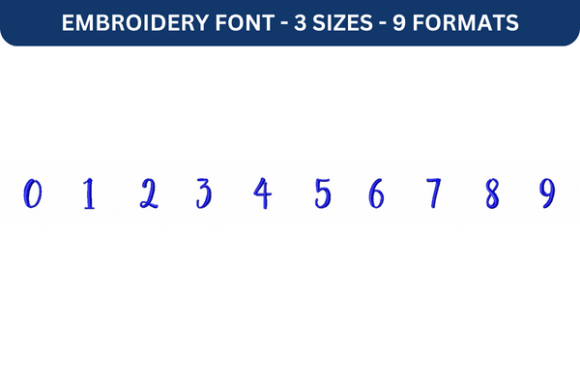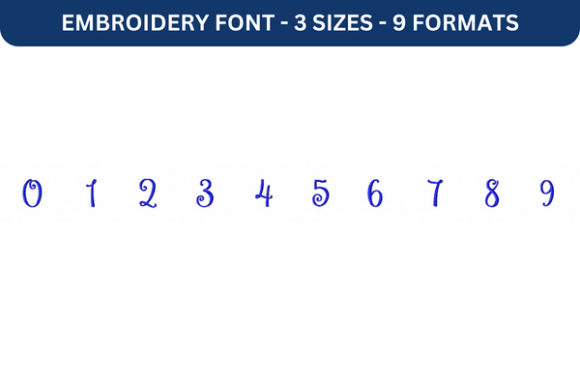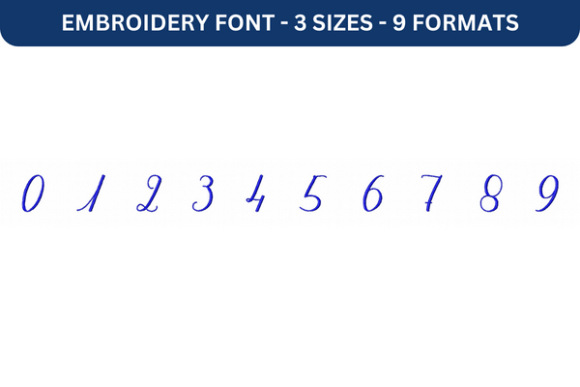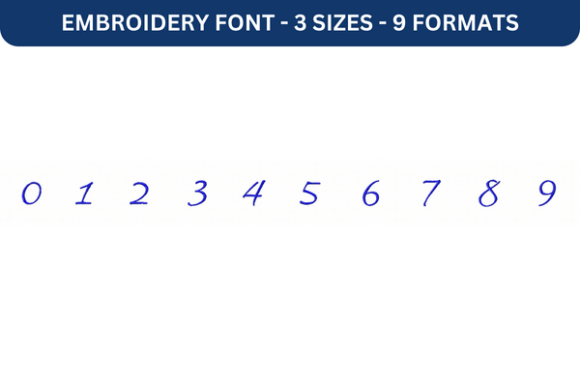
Scriptina Font Number 0 to 9 Review
A Delicate, Hand-Drawn Feel That Elevates Personalized Gifts
As an embroidery designer who’s stitched over 3,000 custom orders—from baby blankets for first birthdays to boutique aprons for local cafés—I approached Scriptina Font Number 0 to 9 with cautious optimism. Script fonts can make or break a handmade product: too fragile, and they vanish on dark fabric; too dense, and they pucker on stretchy knits. What stood out immediately was its gentle, calligraphic rhythm—each digit flows like ink on parchment, with subtle entry/exit strokes and soft tapered ends. It’s not overly ornate, but it *feels* intentional: elegant without being fussy, legible without sacrificing personality. For Back To School projects—think monogrammed lunch totes, embroidered backpack patches, or personalized pencil rolls—it adds warmth and care that generic block fonts simply don’t convey.
Real-World Performance Across Common Embroidery Surfaces
I tested Scriptina Font Number 0 to 9 across six real project types: a cotton twill tote bag, a midweight French terry sweatshirt, a linen kitchen towel, a curved cotton cap, a poly-cotton baby blanket, and a woven cotton pillow cover. On stable fabrics like twill and linen, the stitch density held beautifully—no skipped stitches, no thread breaks. The satin stitch outlines remained crisp, and the fill stitch (where present in thicker numerals like 8 or 0) stayed smooth and even. On the sweatshirt, I used medium-weight cutaway stabilizer and reduced top tension slightly—resulting in clean, flexible lettering that moved with the fabric instead of resisting it.
The cap test was revealing. Curved surfaces demand precise digitizing, and Scriptina Font Number 0 to 9 handled the dome well—no distortion in the curves of 3, 5, or 6. That said, I recommend stitching digits at 10–12 mm height for caps; smaller sizes risk losing fine detail during hooping or wear. On the baby blanket, I paired light pastel thread with soft tear-away stabilizer—again, no puckering, and the delicate terminals stayed intact after gentle machine washing.
Where It Shines—and Where You’ll Want to Pause
Scriptina Font Number 0 to 9 excels in contexts where emotional resonance matters: personalized gifts, nursery decor, teacher appreciation items, and boutique merchandise. A “2024” stitched in this font on a canvas market bag feels celebratory and handmade—not mass-produced. It also pairs beautifully with simple applique designs or minimal floral motifs, letting the numerals carry quiet sophistication.
That said, it’s not ideal for every use case. On highly textured fabrics like heavy terry cloth or bouclé, the finer strokes (especially in 1, 7, and 9) can blur visually—test thoroughly before committing to a full run. Similarly, avoid using it below 8 mm height on any fabric; tiny digits lose their graceful flow and become hard to read post-stitching. And while it works on dark fabric, contrast is critical: pair deep navy or charcoal with bright ecru, gold, or rose thread—not black-on-black. Always check your printable mockup against actual thread swatches before finalizing an Etsy listing or craft fair batch.
Impact on Your Handmade Business
For Etsy sellers and small creative businesses, Scriptina Font Number 0 to 9 quietly raises perceived value. Customers notice when numbers feel *designed*, not dropped in. A graduation tote with “Class of 2025” stitched in this font reads as premium—even if the base product is identical to competitors’. That nuance builds buyer trust: it signals attention to detail, consistency in branding, and respect for the gift’s meaning. In product photography, the script’s fluidity catches light beautifully, enhancing visual appeal without filters. And because it’s a dedicated embroidery file—not a traced vector—it behaves predictably across machines, reducing rework and thread waste.
Practical Notes Before You Stitch
- Always test on scrap fabric—especially when switching between fabric types or thread weights.
- Review stitch density in your embroidery software: look for balanced coverage in curves and terminals.
- Confirm hoop size compatibility—some Creative Fabrica embroidery files include multiple hoop options; others are optimized for standard 4x4 or 5x7.
- Use appropriate stabilizer: cutaway for knits, tear-away for wovens, and lightweight fusible for sheer or delicate layers.
- Inspect small details post-stitching: gently lift the hoop and check for loose threads or flattened satin edges.
- Verify licensing terms on the Creative Fabrica product page before selling finished products—commercial use is typically permitted, but always confirm.
Final Thoughts for Designers Who Stitch With Intention
Scriptina Font Number 0 to 9 isn’t just another machine embroidery design—it’s a tool for storytelling. Whether you’re embroidering “1st Day of Kindergarten” on a denim backpack or “Est. 2024” on a café apron, these digits invite pause and recognition. They soften timelines into moments. They turn functional items—tote bags, sweatshirts, pillow covers—into keepsakes. As a working embroidery designer, I’ve added it to my core design assets not because it’s trendy, but because it consistently delivers clarity, charm, and commercial reliability. If your work centers around personalized gifts, seasonal handmade offerings, or thoughtful custom apparel, Scriptina Font Number 0 to 9 earns its place in your digital embroidery file library—not as filler, but as a quiet signature.