Back to School Apple and Pencils Vol 4
A Whimsical, Ready-to-Stitch Design That Feels Like a Breath of Fresh Air
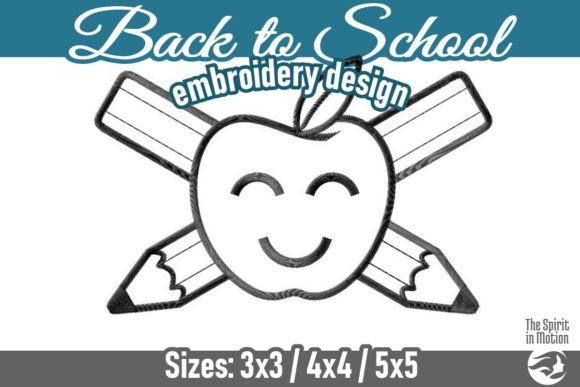
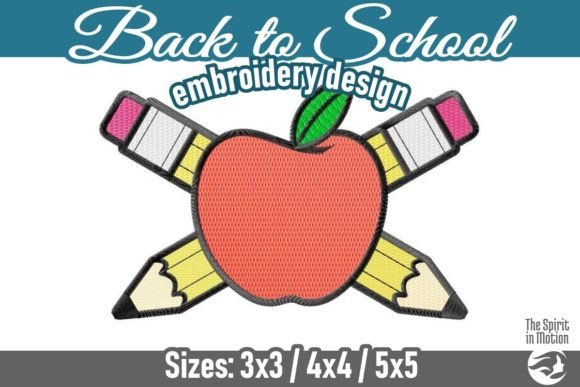
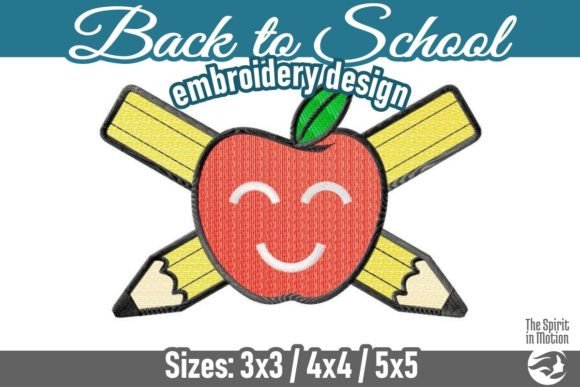
As an embroidery designer who’s stitched everything from nursery monograms to boutique apparel collections, I approach new Creative Fabrica embroidery files with equal parts curiosity and caution. When Back to School Apple and Pencils Vol 4 landed in my cart, it wasn’t just the seasonal timing that caught my eye—it was the promise of “whimsical charm” executed in a filled color design. And honestly? It delivers. The cartoon apple has soft, rounded contours—not overly simplified, not overly busy—while the two crossed pencils add just enough dynamic line work to keep the composition lively without crowding the frame. This isn’t a minimalist icon or a hyper-realistic rendering; it’s a confident, friendly, hand-drawn *vibe*, translated cleanly into stitchable form.
Where This Design Naturally Fits in Real Projects
Back to School Apple and Pencils Vol 4 shines brightest on items where personality and warmth matter more than precision engineering. Think: a cotton tote bag for a first-grade teacher, a lightweight sweatshirt for a homeschool co-op meetup, or a linen kitchen towel gifted to a new grad starting their first teaching job. I tested it on a medium-weight canvas apron—and the way the apple’s glossy red fill stitch popped against natural linen confirmed its strength as a focal point. It also worked beautifully as a small embroidered patch (hooped with tear-away stabilizer), then heat-applied to denim backpacks. Because the design avoids tiny interior details like seed lines or pencil eraser textures, it holds up well at smaller scales—no lost definition when scaled down to 3.5 inches wide for baby blanket corners or cap fronts.
Performance Notes Across Common Embroidery Surfaces
- Tote bags & pillow covers: Excellent stitch density—neither too sparse nor overfilled. The satin-stitched apple outline stays crisp on woven cotton and canvas without puckering, especially with medium cutaway stabilizer.
- Sweatshirts & knits: Requires light- to medium-weight cutaway stabilizer underneath and optional topping for best results. The design’s balanced fill stitch distribution prevents tunneling on fleece-backed fabrics.
- Baby blankets & kitchen towels: Works cleanly on terry cloth and cotton flannel—just increase stabilizer weight slightly and slow your machine speed by 10–15% to let the needle catch every loop.
- Caps & curved surfaces: At under 4 inches wide, it fits comfortably in most standard cap hoops. I recommend using a cap frame with firm hoop tension and testing the layout on scrap fabric first—the pencil crossing is clean enough to avoid distortion at the crown seam.
- Dark fabric: The filled color format means thread contrast is built-in. On navy or charcoal, I swapped to a cream apple and graphite-gray pencils—still charming, still legible, no need for white underlay unless stitching on black velvet or ultra-dense fleece.
What It Adds to Your Handmade Product Value
Let’s be real: customers don’t buy embroidery—they buy meaning, memory, and mood. Back to School Apple and Pencils Vol 4 brings instant storytelling. It signals care, nostalgia, and lighthearted professionalism—all in one compact motif. For Etsy sellers, that translates to stronger product photography: the design photographs clearly even in flat-lay shots, reads well in thumbnail size, and pairs effortlessly with neutral backdrops or warm-toned props. For craft fairs or boutique consignment, it elevates a simple cotton apron from “kitchen accessory” to “thoughtful gift for the teacher who loves whimsy.” And because it avoids dated fonts or overly specific grade-level references, it stays relevant across multiple school years—making it a smart, reusable design asset in your commercial embroidery library.
Practical Tips Before You Stitch
- Always run a test stitch on scrap fabric matching your final project’s weight and stretch—especially if using textured weaves or blends.
- Review the thread color chart included in the Creative Fabrica embroidery file package. Even subtle shifts (e.g., switching from bright red to brick red) change the entire mood.
- Check stitch density visually in your embroidery software—if you see large solid blocks or tight clusters, consider adjusting underlay or reducing density slightly for delicate fabrics.
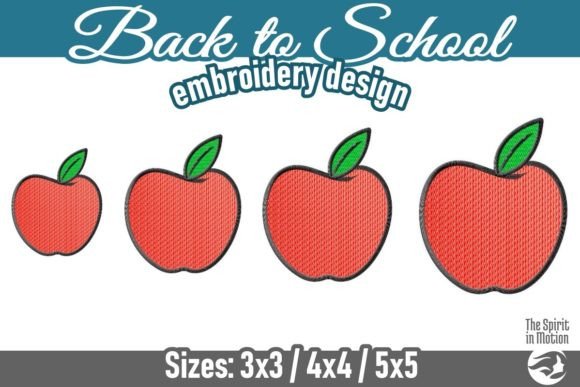
- Confirm hoop size requirements before digitizing adjustments. Some versions of this design may include alternate sizes—verify which one matches your intended use case.
- Compare mockups on both light and dark fabric swatches. A design that looks cheerful on ivory can read muted on heather gray unless thread colors are intentionally adjusted.
- Inspect small details post-stitch: the tip of each pencil and the apple stem should be fully formed—not frayed or skipped. If they’re inconsistent, double-check needle sharpness and thread tension.
- Before listing finished products for sale, revisit the licensing terms on the Creative Fabrica product page. Commercial use is permitted, but always verify whether physical resale, digital redistribution, or POD integration is covered.
Final Thoughts for Designers and Sellers
Back to School Apple and Pencils Vol 4 isn’t flashy—but it’s dependable. It doesn’t try to do everything, and that’s its strength. As a machine embroidery design, it respects fabric behavior, honors hoop limitations, and leaves room for your own creative voice—whether you’re personalizing a student’s backpack or building a cohesive Back To School collection for your handmade shop. It’s the kind of embroidery file that quietly earns repeat use, not because it shouts for attention, but because it consistently stitches well, photographs beautifully, and resonates with buyers who appreciate thoughtful, joyful design. If your workflow values clarity, charm, and commercial flexibility, this one deserves a spot in your active design folder.