Books Embroidery Design Review
First Impression: Classic, Warm, and Knowledge-Forward
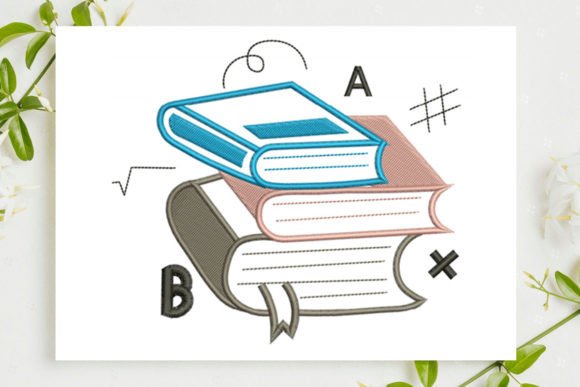
At first glance, Books reads as a timeless, approachable machine embroidery design—neither overly ornate nor starkly minimal. The title and description—“Avid reader, literature fan or a hard-working student. Open the gates of knowledge with these lovely embroidery books”—signal warmth, curiosity, and quiet confidence. It’s not flashy, but it carries presence: classic enough for a university bookstore, friendly enough for a neighborhood indie café, and refined enough for a handmade stationery brand. For small business merch, that balance is gold. It avoids trend fatigue while still feeling intentional—not just decorative, but identity-supporting.
Real-World Business Use: Where Books Shines
Books excels where storytelling meets utility. Imagine it stitched on:
- An embroidered patch sewn onto aprons at a literary-themed bakery—subtle branding that invites conversation without shouting;
- The chest logo on staff uniforms for a local creative studio or co-working space, reinforcing a culture of learning and craft;
- A cap embroidery accent for a Back To School pop-up shop—small but legible, pairing beautifully with neutral denim or canvas;
- A tote bag design for an indie bookstore or library fundraiser—clean, scalable, and instantly recognizable at arm’s length;
- Product packaging accents for handmade journals, bookish candles, or artisanal tea blends—elevating perceived value through tactile, premium-feeling embroidery;
- Customer gift tags or thank-you cards (as a stitched detail on fabric labels), adding warmth to unboxing experiences;
- Etsy branding for digital embroidery file sellers—Books works seamlessly as both a product and a portfolio piece, signaling craftsmanship and thematic cohesion.
In each case, Books supports brand identity without dominating it. It doesn’t compete with your logo—it complements it. That makes it ideal for layered branding strategies: use it as a secondary mark across multiple touchpoints while keeping your primary logo front-and-center.
Where to Use Books Thoughtfully
Like any strong design, Books demands thoughtful placement. On curved surfaces like cap fronts or sleeves, test stitch density and outline definition early—tight curves can blur fine details if the design wasn’t digitized with contour compensation. Avoid scaling it below 2.5 inches wide unless you’ve verified legibility at that size; small patch applications (e.g., 1.75” iron-on patches for kids’ backpacks) may lose nuance in letterforms or layered book elements. Dark uniforms require high-contrast thread colors—navy with cream or charcoal with pale gold reads better than black-on-black. And on textured fabrics like linen-blend aprons or burlap totes, consider how stitch density interacts with weave openness: too dense, and the design stiffens; too sparse, and it fades into the grain.
Frequent washing? Confirm whether the digitization includes secure underlay and satin-stitched edges—critical for longevity on work shirts or reusable bags. If the description mentions “lovely embroidery books” but doesn’t specify durability features, assume you’ll need to reinforce stabilizer choice and test wash cycles before bulk production.
Brand Identity & Customer Trust: More Than Just Stitches
For small businesses, every embroidered detail contributes to perceived professionalism—and Books delivers quietly. It signals thoughtfulness: not just “we sell things,” but “we value ideas, growth, and shared experience.” That builds trust with customers who align with those values—students, educators, creatives, lifelong learners. When used consistently across aprons, caps, and tote bags, it strengthens visual consistency without repetition fatigue. Unlike generic icons, Books feels handmade and human—ideal for brands leaning into authenticity over polish. It also boosts buyer engagement: people pause, smile, and often ask, “What’s your story?” That organic interaction is priceless for boutique merchandise and local event merch.
Practical Designer Notes Before You Stitch
Before committing to production, run these checks:
- Test in black and white first—verify contrast and clarity without color distraction;
- Check small patch viability—scale down to your target size and inspect spacing between letters and book outlines;
- Review thread color contrast—especially against dark or busy fabrics;
- Inspect spacing and kerning—tight lettering can merge in dense stitching;
- Confirm hoop size compatibility—if your production workflow relies on specific hoops, verify fit before digitizing adjustments;
- Test on real fabric—not just mockups—with your chosen stabilizer and needle type;
- Create a printable mockup for client approval—show how Books integrates with existing design assets;
- Compare beside your other embroidery file assets—does it hold visual weight alongside logos, icons, or monograms?
- Confirm commercial licensing—since this is intended for small business merch and custom apparel, ensure your purchase includes rights for resale, branded patches, and commercial embroidery use.
Remember: the description says “This machine embroidery design comes with multiple embroidery file formats and can…” —but doesn’t list them. Always verify which formats are included (DST, PES, JEF, etc.) and whether they’re optimized for your machines. Likewise, if hoop size, stitch count, or fabric recommendations aren’t stated, reach out to the seller—or run your own test stitch first.
Final Thought: A Quiet Anchor for Your Brand
Books isn’t a loud statement—it’s a steady, meaningful anchor. In a crowded market of small business merch and Back To School offerings, it stands out by resonating emotionally while performing flawlessly across embroidered patch, apron embroidery, cap embroidery, and tote bag design applications. It elevates handmade product presentation, supports cohesive design assets, and quietly tells your audience: “We believe in what we make—and in what you’re learning, creating, and becoming.” For embroidery shops, Etsy sellers, and craft-focused brands, that kind of resonance isn’t just nice to have. It’s essential.