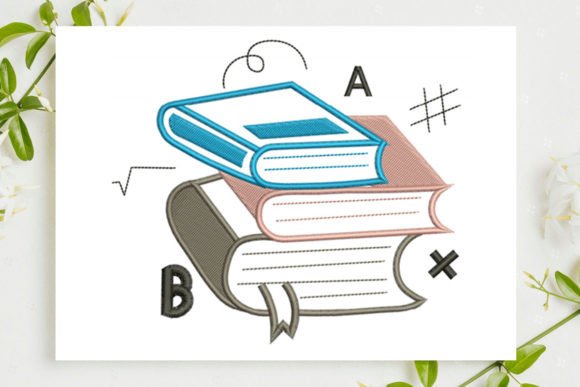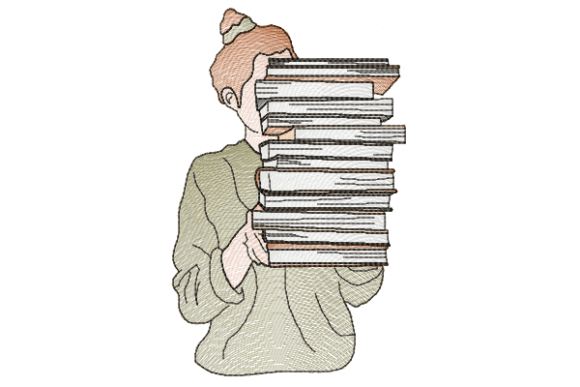
Girl and Books Embroidery Design
A Craft Fair Designer’s Real-World Review
As an embroidery designer who’s prepped over 200 craft fair booths—and shipped thousands of handmade products to Etsy sellers, boutique makers, and small shop owners—I approach every new machine embroidery design like a buyer scanning a crowded market table: Does it stop the eye? Does it tell a story in under three seconds? Does it translate beautifully from screen to stitch, fabric to finish?
Girl and Books lands with quiet confidence. It’s not loud or flashy—but it’s deeply resonant. From the title and description alone, I sense a soft, thoughtful aesthetic: warm, literary, gently modern—not rustic, not vintage, not cartoonish. It leans into curiosity and calm intelligence rather than nostalgia or whimsy. That makes it unexpectedly versatile for Back To School without feeling academic or sterile. Think “first-day-of-class confidence,” not “report card stress.”
Where Girl and Books Shines on Craft Fair Products
This design thrives where intention meets utility—and that’s exactly what sells at handmade markets.
- Tote bag design: Perfect as a centered chest panel or subtle side accent. The girl-and-books composition balances vertical and horizontal rhythm—so it reads cleanly even when viewed from a distance or while walking past your booth.
- Apron embroidery: Ideal above the pocket or centered on the bib. Its gentle scale and narrative warmth reinforce the maker’s identity—ideal for teachers, librarians, indie booksellers, and creative educators browsing your table.
- Tea towel embroidery: Works best when placed high on the towel’s front corner (not centered), letting the stack of books echo the towel’s folded edge. Avoid dense stitching near hems—check stitch density before production.
- Embroidered patch: A standout option. Small-scale versions hold clarity if the books retain distinct silhouettes and the girl’s outline stays clean. Great for pinning to backpacks, denim jackets, or as gift tags.
- Fabric pouch & pillow cover: Strong focal point—especially on natural linen or oatmeal cotton. The design’s inherent stillness pairs beautifully with tactile, unbleached textiles.
- Caps & market bags: Use with caution. Curved surfaces compress detail; test placement on scrap fabric first. Opt for simplified versions if the original includes fine line work or tight spacing between books.
What Buyers Actually Notice—And Why It Sells
In real-time booth traffic, Girl and Books stands out because it feels human, not algorithmic. It doesn’t shout—it invites. That’s gold for handmade markets, where shoppers linger longer over pieces that feel personal, meaningful, and quietly confident.
It elevates perceived value instantly: a plain canvas tote becomes a curated gift. A simple tea towel becomes a conversation starter. That emotional resonance directly supports higher price points—especially when paired with quality thread colors and intentional fabric choices.
For Etsy sellers and digital embroidery file buyers, Girl and Books also performs well in listings. It photographs clearly on neutral backdrops, scales nicely across printable mockups, and reads well in thumbnail grids—no confusing shapes or muddy outlines to distract the scroll.
Production Notes Every Embroidery Designer Should Check
Before cutting your first stabilizer sheet or loading your hoop, pause and verify these practical points:
- Test on scrap fabric—especially if using textured towels, thick canvas, or dark fabric. Dense stitch areas may pucker or sink without proper cutaway or tear-away support.
- Review thread contrast: Light-colored thread on deep navy or charcoal can fade visually. If your version uses subtle shading, confirm visibility across fabric types.
- Confirm hoop size and spacing: Tight compositions risk crowding on smaller hoops. Ensure at least ¼" clearance around all elements for smooth hooping and clean trimming.
- Inspect stitch density: Overly dense fills in book spines or hair details may not resolve cleanly on lightweight cotton or knit fabrics. Adjust underlay or reduce fill % if needed.
- Use the right stabilizer: Medium-weight cutaway works best for structured items (totes, caps); lightweight tear-away suits tea towels and pillow covers.
- Create at least one real mockup—not just a digital preview. See how the design drapes, folds, and catches light in person.
- Compare fabric colors: Warm creams, oatmeals, and soft greys make the design sing. Avoid pairing with busy prints or high-contrast plaids that compete for attention.
- Confirm commercial licensing before selling finished products. This is essential for any digital embroidery file you plan to use in commercial embroidery or wholesale craft fair product lines.
Design Assets That Build Your Brand—Not Just Your Booth
Girl and Books isn’t just another embroidery file. It’s a brand-aligned motif that reinforces consistency across your small shop product line. When repeated thoughtfully—on a tote, a patch, a tea towel—you build visual recognition without repetition fatigue. Customers begin to associate your booth with quiet creativity, mindful gifting, and literary charm.
That cohesion strengthens your handmade product story. It tells buyers you curate meaning—not just motifs. And in a sea of generic florals and slogans, that distinction drives engagement, repeat visits, and word-of-mouth referrals.
Final Thought: A Design That Grows With You
I’ve seen dozens of “back to school” designs cycle through trends—some loud, some clever, most forgettable. Girl and Books endures because it’s rooted in something timeless: the quiet joy of turning a page, the pride in learning, the comfort of stories.
It’s easy to understand at a glance. It scales gracefully—from tiny patch to bold tote centerpiece. It photographs with integrity. And yes—it’s absolutely batch-friendly, provided you’ve tested stabilizer, spacing, and fabric pairings first.
For craft fair sellers, Etsy sellers, Cricut crafters, and boutique makers building a sustainable handmade business, Girl and Books isn’t just another machine embroidery design. It’s a thoughtful, sale-ready asset—one that helps your finished product feel intentional, valuable, and unmistakably yours.