Black Cat Number 4: A Smart Brand Patch for Small Business Merch
First Impression: Playful, Polished, and Professionally Distinctive
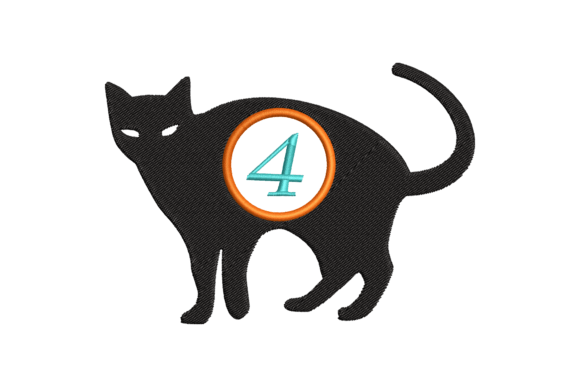
As an embroidery designer who’s digitized over 2,000 commercial projects for cafés, boutiques, pet brands, and creative studios, my first read on Black Cat Number 4 is immediate: it’s a confident fusion of whimsy and craft. The title alone signals personality—black cats carry charm, curiosity, and quiet confidence; “Number 4” adds structure, rhythm, and subtle numerology appeal (think fourth quarter launches, Class of ’24, or a boutique’s fourth location). It doesn’t scream “cute”—it invites recognition. That balance makes Black Cat Number 4 far more than decorative—it’s a brand-ready motif with built-in storytelling potential.
Real-World Business Use: Where This Design Earns Its Stitch Count
In small business merch, every design must pull double duty: express identity *and* withstand daily wear. Black Cat Number 4 excels across high-impact applications:
- Embroidered patches — Ideal for sew-on or iron-on application on tote bags, denim jackets, and aprons. Its clean silhouette holds integrity at 2.5"–3.5", making it perfect for boutique staff uniforms or customer gift sets.
- Cap embroidery — Works beautifully on structured front panels (not curved crowns) when digitized with balanced underlay and moderate stitch density. Avoid ultra-tight curves unless the file includes contour compensation.
- Apron embroidery — Positioned above the pocket or centered on the bib, Black Cat Number 4 adds artisanal warmth to bakeries, florists, and craft studios—reinforcing handmade credibility without looking childish.
- Tote bag design — Scales well to 4"–5" on canvas or cotton duck. Paired with minimalist typography (“Est. 2020” or shop name), it creates cohesive, Instagram-friendly branding.
- Product packaging accents — Think embroidered labels on ceramic mugs, fabric-wrapped soap boxes, or reusable produce bags. Here, Black Cat Number 4 functions as a tactile signature—not just decoration.
It also fits naturally within Back To School campaigns: think tutoring studios, art supply shops, or indie stationery brands using it on student tote bags, teacher appreciation gifts, or classroom supply pouches.
Careful Application Zones: Know When to Adjust or Opt Out
Not every surface is equal—and Black Cat Number 4 shines brightest when matched thoughtfully to context:
- Avoid sub-2" patch sizes unless the original embroidery file was explicitly optimized for miniaturization. Fine outlines or tight number serifs may blur or vanish.
- Test rigorously on dark uniforms—especially navy or charcoal. High-contrast thread colors (e.g., bright white or metallic silver) are essential for legibility and perceived professionalism.
- Curved surfaces like cap crowns or knit beanies demand re-digitizing. Don’t assume the base file adapts automatically—stitch migration can distort the cat’s shape or number clarity.
- Textured fabrics (tweed, burlap, heavy linen) require extra stabilizer and possibly reduced stitch density. What reads crisp on twill may look muddy on raw canvas.
- Frequent washing cycles mean tighter satin stitches and secure jump-thread trims matter. If the file lacks dense underlay or lock-stitch anchors, durability suffers.
Brand Identity Impact: More Than Just a Motif
For small businesses, consistency isn’t about repetition—it’s about resonance. Black Cat Number 4 strengthens brand identity by offering visual shorthand: instantly recognizable, emotionally warm, and quietly distinctive. Customers remember how a design *feels*—not just how it looks. When stitched on a barista’s apron or a florist’s tote, it signals care, creativity, and attention to detail. That builds trust faster than a slogan ever could.
It also elevates perceived product value. Handmade goods gain authenticity when paired with intentional, well-executed embroidery—not generic clip art. And because it avoids overt trends (no gradients, no hyper-realism), Black Cat Number 4 supports long-term visual consistency across seasons, platforms, and product lines.
Practical Designer Notes Before You Stitch
Before committing to production, run these checks—every time:
- Test in black and white first. Does the silhouette hold? Are negative spaces readable? If it falters monochromatically, color won’t save it.
- Verify small-patch viability. Resize the digital embroidery file to your target patch dimension (e.g., 2.75") and inspect stitch paths in your editing software.
- Review thread color contrast against your fabric swatches—not just on screen. A “charcoal gray” thread on black denim may disappear entirely.
- Inspect spacing between cat and number. Tight kerning risks stitching errors; generous spacing ensures clarity at scale.
- Confirm hoop size compatibility. Some files require large-format hoops (e.g., 5" x 7")—verify your machine and frame support it.
- Test on real fabric + stabilizer combo. A cotton poplin apron behaves differently than a polyester tote—don’t skip physical sampling.
- Create a printable mockup for client approval. Visual alignment prevents costly rework later.
- Compare beside existing design assets. Does Black Cat Number 4 harmonize with your logo, typography, and other embroidered elements?
- Confirm commercial licensing. Since this is intended for small business merch and resale, ensure the digital embroidery file permits commercial embroidery use—many hobby-grade files do not.
Remember: Black Cat Number 4 isn’t just a machine embroidery design—it’s a versatile, scalable asset in your small business branding toolkit. Whether you’re launching custom apparel for a pet-friendly café, refreshing staff uniforms for a local studio, or building Etsy-branded merchandise, this embroidery file delivers charm with intention. Treat it with the same strategic care you’d give your logo—and it’ll return value in recognition, resonance, and repeat customers.