Colorful Pencils: A Smart Embroidery Choice for Small Business Merch
First Impression: Friendly, Handmade, and Professionally Playful
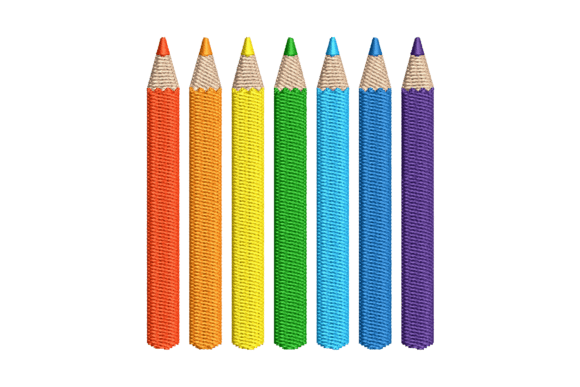
As an embroidery designer who’s digitized and stitched hundreds of small business logos and branded patches, my first read on Colorful Pencils is immediate and positive: it feels authentically hand-drawn yet polished—neither overly childish nor stiffly corporate. The title alone signals approachability and creativity, while “hand-drawn by an embroidery artist” tells me this wasn’t auto-traced or AI-generated. That matters. For a café that sketches latte art on napkins, a florist who hand-labels bouquets, or a craft studio teaching kids’ workshops, Colorful Pencils reads as warm, intentional, and human-made—not generic clipart. It lands squarely in the sweet spot between playful and professional: bold enough for visibility, delicate enough to feel artisanal.
Where Colorful Pencils Shines in Real Business Use
This design excels where small businesses need quiet brand reinforcement—not loud slogans, but subtle storytelling. On a staff apron for a local bakery? Perfect. The pencils suggest creativity, care, and attention to detail—values customers associate with handmade goods. As a chest patch on a boutique’s linen work shirt? It adds charm without competing with the garment’s texture. For a pet brand launching a “Paw & Pencil” sketchbook line, Colorful Pencils becomes a versatile anchor—stitched on tote bags for pop-up events, embroidered onto bandana tags, or scaled down as a sleeve accent on staff caps.
It works especially well for back to school-aligned small businesses: a stationery shop’s custom tote bag design, a tutoring studio’s embroidered lanyards, or a children’s bookstore’s staff aprons. But don’t limit it to September—its artistic energy translates year-round for creative studios, art supply retailers, indie publishers, and even florists who sketch bouquet layouts by hand. As a digital embroidery file, Colorful Pencils adapts cleanly across fabric types—from cotton twill patches to structured cap fronts—when digitized thoughtfully.
Smart Applications Across Your Merch Line
- Embroidered patch: Ideal for iron-on or sew-on application on jackets, backpacks, or product packaging—adds instant handmade credibility.
- Cap embroidery: Works best on mid-crown or structured front panels; avoid ultra-low-profile caps unless simplified.
- Apron embroidery: A natural fit above the pocket or centered on the bib—softens utility with personality.
- Tote bag design: Stitches crisply on canvas or duck cloth; balances visual weight without overwhelming the bag’s function.
- Product labeling: Great as a small branded accent on handmade soap wraps, notebook spines, or ceramic tag labels.
Use With Care: Design Limits Every Embroiderer Should Know
Even charming designs have boundaries—and overlooking them risks poor stitch quality or weak brand impact. Colorful Pencils includes fine line work and likely varied pencil widths, so test early for these common pitfalls:
- Small patch sizes (under 2.5” wide): Delicate pencil tips or subtle color transitions may blur. Always run a black-and-white test stitch to assess clarity at scale.
- Curved surfaces (like cap fronts): Confirm the design’s outer shape fits comfortably within standard hoop size and doesn’t stretch awkwardly over seams.
- Dark uniforms or textured fabric: Review thread color contrast carefully—light yellows or pale pinks may vanish on navy or tweed without proper underlay or stabilizer.
- Frequent washing: High stitch density in pencil erasers or graphite tips could snag if not digitized with appropriate underlay and reduced density in tight areas.
How Colorful Pencils Strengthens Your Brand Identity
For small businesses, consistency isn’t just about matching fonts—it’s about emotional resonance. Colorful Pencils reinforces a brand voice that’s thoughtful, imaginative, and grounded in craft. When customers see it on your staff’s aprons and your product packaging, they subconsciously connect your business to qualities like curiosity, precision, and personal touch. That builds trust faster than a slogan ever could. It also supports visual consistency across channels: use the same Colorful Pencils embroidery file for your Etsy shop banner (as a printable mockup), your in-store signage, and your team’s uniforms—creating cohesion without repetition.
And because it’s rooted in hand-drawn authenticity, it elevates perceived product value. A customer paying $48 for a handmade ceramic mug feels justified when the matching tote bag carries the same Colorful Pencils embroidery—it signals intention, not afterthought.
Essential Embroidery Designer Notes Before You Stitch
Before sending Colorful Pencils to production—or offering it to clients—follow these non-negotiable steps:
- Test it in black and white first to confirm legibility and balance at your target size.
- Check how it performs at your smallest intended patch size—don’t assume scalability.
- Review thread color contrast against your base fabric; adjust if needed for readability and durability.
- Inspect spacing between pencil elements—tight gaps risk skipped stitches or thread breaks.
- Confirm hoop size compatibility and whether the design requires special mounting (e.g., frameless hoops for curved caps).
- Test on your actual fabric and stabilizer combo—canvas behaves differently than denim, which behaves differently than performance polyester.
- Create a physical or high-res printable mockup for client approval before digitizing or stitching.
- Compare Colorful Pencils beside your other design assets—does it harmonize with your logo, typography, and brand palette?
- Verify commercial licensing—since this is intended for small business merch, custom apparel, and commercial embroidery, ensure your digital embroidery file permits resale and branded use.
Remember: Colorful Pencils isn’t just decoration. It’s a brand amplifier. Used intentionally—as part of your broader embroidery strategy—it turns everyday items into quiet ambassadors for your business’s values. Whether you’re stitching for a flower shop, a tutoring co-op, or a handmade ceramics line, this machine embroidery design earns its place in your toolkit—not because it’s trendy, but because it’s thoughtful, adaptable, and unmistakably human.